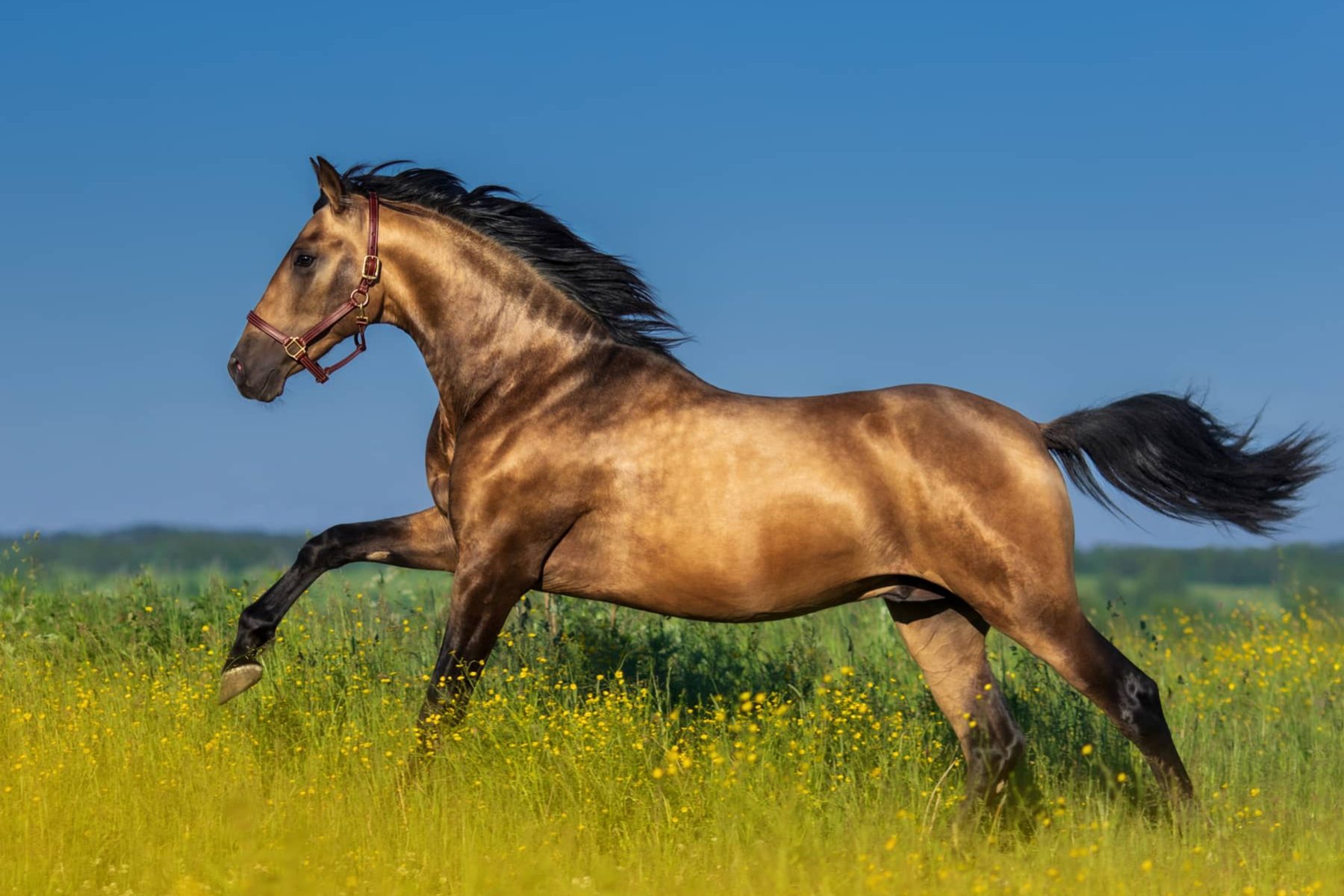
How Blue Light Technology is Helping Horses with PPID (Equine Cushings Disease)

If you’re a horse owner, you’ve probably noticed how much the seasons affect your horse. Changes in daylight can influence coat growth, energy levels, appetite, and overall comfort. For horses living with PPID (Pituitary Pars Intermedia Dysfunction), also known as equine Cushing’s disease, these seasonal shifts can make symptoms much more noticeable.
This is where Equilume’s blue light technology comes in. Delivered through a wearable Equilume Light Mask or specialized Stable Light system, blue light therapy offers a simple, non-invasive way to support horses with PPID by helping their bodies better manage seasonal changes in daylight.
Backed by published research and real-world owner experiences, Equilume blue light is proving to be a valuable complement to veterinary care — helping horses shed earlier, feel better, and enjoy an improved quality of life.
Why Seasonal Light Changes Matter for Horses with PPID
Horses are extremely sensitive to daylight. Their internal systems use light cues to regulate hormones that control:
- Coat growth and shedding
- Energy levels
- Metabolism and fat storage
- Seasonal behavior and mood
In healthy horses, this system stays well balanced. But in horses with PPID, hormone regulation is already disrupted — and short winter days can make symptoms worse.
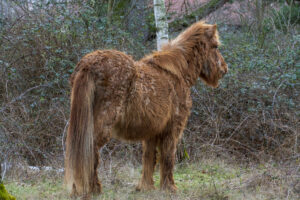
Example of PPID
Common PPID-related challenges include:
- Long, thick, or curly coats that don’t shed normally
- Delayed or uneven shedding
- Abnormal fat pads
- Reduced energy
- Recurrent infections
- Depression or lethargy
- More pronounced clinical signs during seasonal transitions
Many owners notice their horses struggle most in late winter and early spring.
How Blue Light Helps Regulate the Horse’s Internal Clock
Horses respond strongly to blue wavelengths of light, particularly in the 468–480 nm range — the same spectrum used in Equilume products.
When a horse receives 15 hours of blue light per day (like with the Equilume Pro Light Mask), the brain interprets this as a “long summer day.” This helps regulate the internal clock that controls circadian rhythms. This includes the circadian rhythm in the hormone melatonin, which in turn influences coat growth and metabolism.
Key benefits of consistent blue light exposure include:
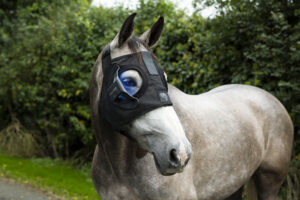
Equilume Pro Light Mask
- Normalization of shedding patterns
- Improved coat condition and shortened hair length
- Regulation of metabolism and fat distribution
- Reduction of seasonal hormone swings that can worsen PPID symptoms
- Enhanced immune system function, reducing frequency of infections
The goal is simple: maintain a stable, summer-like light signal, even during winter.
Research Spotlight: Blue Light Masks in Horses with PPID
A 13-month collaborative research study involving equine researchers at University College Dublin and the University of Kentucky followed horses diagnosed with PPID. Some horses wore an Equilume Pro Light Mask starting December 1, receiving 15 hours of blue light daily from 8:00 a.m. to 11:00 p.m. Other horses remained under natural light only.
A large proportion of the horses in the study were also receiving pergolide medication, meaning the study evaluated blue light as a complement to standard veterinary treatment.
What researchers measured:
- Hair samples
- Body condition scores
- Shedding scores
- Changes in clinical signs
- Owner-reported quality of life
More than 7,360 individual hairs were analyzed throughout the study.
What changed in the horses wearing masks:
- Earlier shedding in spring
- Continued shedding later into autumn
- Improved coat condition
- Fewer abnormal coat growth patterns
- Reduced abnormal fat deposits
- Increased energy levels within two months
Most importantly, owners consistently reported improvements in overall quality of life compared to horses under natural light only.
What This Means for Horse Owners
For horses with PPID, managing light exposure through winter can help their bodies function more normally. Using Equilume Light Masks as a treatment for PPID (Cushing’s Disease) could help improve symptoms and quality of life. While blue light therapy is not a replacement for veterinary care or medication, it can be a powerful addition to a well-managed PPID program.
Andrea Waymouth and “Lyka” Competing
“Using the Equilume Pro Light Mask was the only change we made, and the improvement in my PPID mare’s quality of life was incredible.”
— Dr. Andrea Waymouth, DVM

When using the Equilume Pro Light Mask, owners of PPID horses often describe brighter moods, improved coats, and horses that simply feel more comfortable.
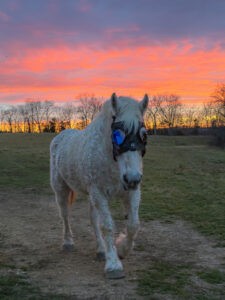
PPID Horse Using Equilume
Is Blue Light Right for Your PPID Horse?
You may want to consider Equilume blue light if your horse:
- Has PPID and struggles with long hair or delayed shedding
- Experiences winter lethargy or seasonal dips in energy
- Shows abnormal fat distribution
- Lives outdoors or in variable lighting conditions
- Could benefit from a simple, research-backed support tool
Light matters — and for horses with PPID, consistent blue light exposure with tools like the Equilume Pro Light Mask and Equilume Stable Light can make a meaningful difference.
Help manage PPID using the Equilume Pro Light Mask.
Access the full scientific papers on our Research page.